
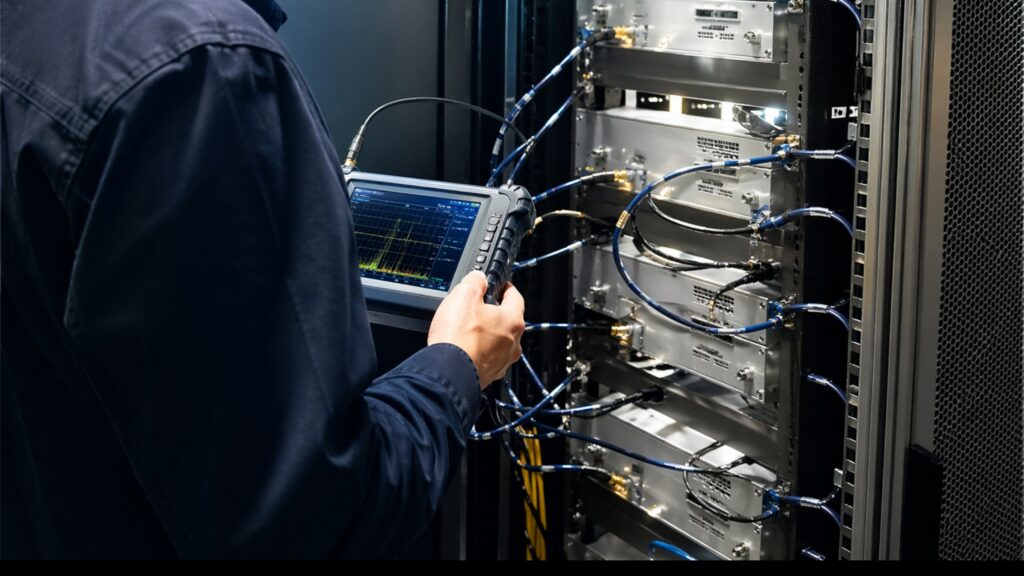
The Certified RF Shielding Troubleshooting and Remediation Specialist (CRSTRS) Certification Program by Tonex prepares professionals to diagnose, analyze, and correct shielding failures in installed facilities where electromagnetic protection is critical to mission success. The program focuses on practical troubleshooting methods for seam leakage, door and gasket degradation, glazing defects, penetration leakage, cable entry problems, and HVAC-related shielding weaknesses. Participants learn how to identify root causes, prioritize corrective actions, and verify remediation results through structured retesting and performance validation.
This program is especially valuable for organizations responsible for secure rooms, test enclosures, protected facilities, and retrofit environments where shielding performance can drift over time due to wear, installation defects, modification work, or environmental conditions. Strong shielding is not only an engineering concern but also a cybersecurity concern because electromagnetic leakage can expose sensitive systems, communications, and data pathways to unintended interception or compromise. Cybersecurity resilience depends in part on physical-layer containment, especially in environments supporting critical infrastructure, defense operations, and secure communications. By connecting shielding integrity with cybersecurity risk reduction, this program helps teams strengthen both facility performance and information protection.
Learning Objectives
- Diagnose common RF shielding failures in installed facilities using structured troubleshooting methods
- Evaluate seam leakage, bonding defects, and continuity breakdown across shielded assemblies
- Troubleshoot doors, gaskets, windows, and penetrations that reduce shielding effectiveness
- Assess cable entries, filtered interfaces, and ventilation treatments for leakage vulnerabilities
- Develop corrective action plans based on defect severity, operational impact, and retest priorities
- Verify remediation effectiveness through retest procedures, measurement review, and documentation
- Understand how shielding reliability supports cybersecurity by reducing electromagnetic leakage risks
Audience
- Field Engineers
- Service Teams
- Consultants
- Retrofit Specialists
- Facility Maintenance Personnel
- EMC and RF Compliance Professionals
- Cybersecurity Professionals
Program Modules
Module 1: RF Shielding Failure Analysis Fundamentals
- Shielding failure mechanisms
- Installed facility risk indicators
- Visual inspection workflow
- Baseline performance review
- Root cause identification
- Environmental effect assessment
- Troubleshooting documentation practices
Module 2: Seam Leakage Detection And Diagnosis
- Seam construction review
- Joint discontinuity indicators
- Panel interface leakage
- Fastener integrity checks
- Bonding path inspection
- Localized hotspot mapping
- Seam repair prioritization
Module 3: Door And Gasket Defect Resolution
- Door alignment assessment
- Contact pressure evaluation
- Gasket wear identification
- Latch mechanism review
- Hinge condition analysis
- Closure repeatability checks
- Remediation action selection
Module 4: Windows Penetrations And Cable Entries
- Shielded window inspection
- Glazing continuity issues
- Penetration seal review
- Cable entry leakage paths
- Connector bonding evaluation
- Interface integrity assessment
- Retrofit correction methods
Module 5: HVAC Leakage And Remediation Planning
- Ventilation path analysis
- Waveguide performance review
- Honeycomb structure defects
- Filter placement issues
- Airflow versus shielding tradeoffs
- Corrective action planning
- Stakeholder coordination methods
Module 6: Retest Validation And Compliance Reporting
- Retest procedure planning
- Measurement point selection
- Before and after comparison
- Verification result interpretation
- Residual risk evaluation
- Final remediation reporting
- Long term maintenance recommendations
Exam Domains
- Shielding Failure Investigation Principles
- Electromagnetic Leakage Risk Assessment
- Remediation Strategy and Prioritization
- Verification Testing and Result Interpretation
- Secure Facility Integrity Management
- RF Protection Governance and Documentation
Course Delivery
The course is delivered through a combination of expert-led lectures, interactive discussions, guided troubleshooting workshops, and project-based learning focused on RF shielding issues in operational facilities. Participants gain access to structured readings, case-based examples, remediation frameworks, and practical reference materials that support real-world decision-making. The delivery approach is designed to help professionals connect field observations with corrective action planning, verification testing, and long-term shielding integrity management.
Assessment and Certification
Participants are assessed through quizzes, applied assignments, and a final evaluation focused on troubleshooting analysis, remediation planning, and verification decision-making. Upon successful completion of the program, participants receive the Certified RF Shielding Troubleshooting and Remediation Specialist (CRSTRS) certification from Tonex.
Question Types
- Multiple Choice Questions (MCQs)
- Scenario-based Questions
Passing Criteria
To pass the Certified RF Shielding Troubleshooting and Remediation Specialist (CRSTRS) Certification Training exam, candidates must achieve a score of 70% or higher.
Strengthen your ability to diagnose shielding failures, plan effective remediation, and protect high-value environments with confidence. Enroll in the Certified RF Shielding Troubleshooting and Remediation Specialist (CRSTRS) Certification Program by Tonex to build practical expertise that supports operational performance, compliance readiness, and cybersecurity protection.