
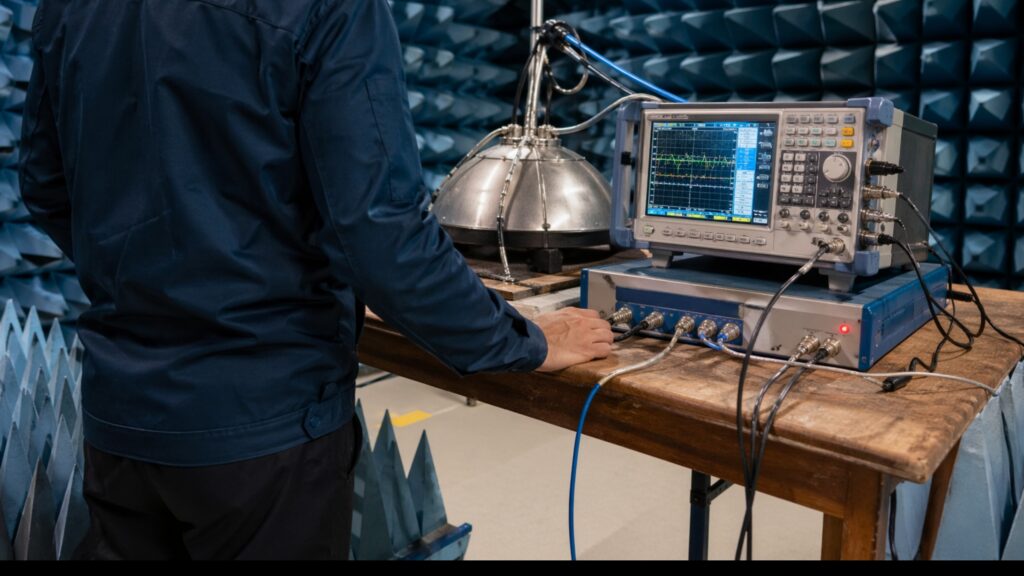
The Certified Shielding Effectiveness Measurement Specialist (CSEMS) Certification Program by Tonex is designed for professionals who need a stronger command of shielding effectiveness testing, measurement science, instrumentation behavior, and defensible data interpretation. This program builds practical understanding of how shielding performance is evaluated across different environments, frequency ranges, and test conditions. Participants learn how to compare reference and shielded measurements, assess dynamic range, account for near-field and far-field behavior, and identify the limitations that influence result quality.
The program also strengthens technical judgment in repeatability, uncertainty estimation, error control, and reporting consistency. It helps specialists produce more reliable conclusions when evaluating shielding materials, enclosures, cables, and system-level protective designs.
Cybersecurity is increasingly tied to shielding performance because electromagnetic leakage and unintended emissions can expose sensitive signals, device behavior, and system vulnerabilities. Strong cybersecurity practices depend on accurate measurement of shielding performance in environments where signal protection, interference control, and information assurance matter. This makes cybersecurity awareness an important part of modern shielding verification and technical risk management.
Learning Objectives
- Understand the principles and calculation methods used in shielding effectiveness measurement
- Compare reference and shielded measurements with correct technical interpretation
- Evaluate dynamic range, receiver sensitivity, and instrumentation constraints
- Analyze frequency-dependent behavior across low, mid, and high frequency bands
- Distinguish near-field and far-field effects during test setup and result review
- Identify major uncertainty contributors, error sources, and repeatability concerns
- Recognize how cybersecurity risk can be influenced by poor shielding measurement and weak electromagnetic protection
Audience
- EMC and EMI Test Engineers
- Shielding Effectiveness Measurement Specialists
- RF Engineers and Analysts
- Compliance and Verification Professionals
- Defense and Aerospace Technical Staff
- Electronics Design and Validation Engineers
- Cybersecurity Professionals
Program Modules
Module 1: Foundations of Shielding Measurement Science
- Principles of shielding effectiveness
- Fundamental electromagnetic field behavior
- Measurement units and reference levels
- Basic transmission and attenuation concepts
- Standard test environment considerations
- Role of coupling and leakage
- Practical interpretation of baseline data
Module 2: Reference and Shielded Measurement Methods
- Establishing valid reference measurements
- Comparing shielded measurement responses
- Normalization and correction approaches
- Managing source and receiver placement
- Controlling test geometry consistency
- Verifying repeatability across test runs
- Documenting traceable measurement conditions
Module 3: Instrument Dynamic Range and Sensitivity
- Understanding instrument sensitivity limits
- Dynamic range and noise floor
- Receiver saturation and overload risks
- Bandwidth and resolution tradeoffs
- Signal stability during measurements
- Effects of calibration drift
- Selecting appropriate measurement settings
Module 4: Frequency Effects and Field Regions
- Frequency band dependent behavior
- Low frequency shielding challenges
- High frequency aperture effects
- Near field coupling mechanisms
- Far field propagation characteristics
- Transition region interpretation issues
- Matching method to frequency range
Module 5: Error Sources and Measurement Uncertainty
- Systematic and random error sources
- Cable and connector loss effects
- Fixture influence on results
- Environmental variation and drift
- Measurement uncertainty estimation methods
- Repeatability and reproducibility analysis
- Confidence in reported performance
Module 6: Data Reduction and Result Interpretation
- Converting raw data to SE
- Smoothing and averaging considerations
- Valid comparison across test sets
- Interpreting anomalies and outliers
- Preparing defensible technical reports
- Relating results to design performance
- Linking findings to protection risks
Exam Domains
- Measurement Theory for Electromagnetic Attenuation
- Instrumentation Performance and Signal Integrity
- Test Configuration Control and Technical Validity
- Frequency Response Analysis in Shielded Structures
- Uncertainty Evaluation and Measurement Confidence
- Risk Interpretation for Sensitive System Protection
Course Delivery
The course is delivered through a combination of lectures, interactive discussions, hands-on workshops, and project-based learning, facilitated by experts in the field of Certified Shielding Effectiveness Measurement Specialist (CSEMS). Participants will have access to online resources, including readings, case studies, and tools for practical exercises.
Assessment and Certification
Participants will be assessed through quizzes, assignments, and a capstone project. Upon successful completion of the course, participants will receive a certificate in Certified Shielding Effectiveness Measurement Specialist (CSEMS).
Question Types
- Multiple Choice Questions (MCQs)
- Scenario-based Questions
Passing Criteria
To pass the Certified Shielding Effectiveness Measurement Specialist (CSEMS) Certification Training exam, candidates must achieve a score of 70% or higher.
Enroll in the Certified Shielding Effectiveness Measurement Specialist (CSEMS) Certification Program by Tonex to strengthen your expertise in shielding measurement science, improve the quality of technical evaluations, and support more secure, reliable, and cybersecurity-aware electromagnetic protection practices.